

For example, you can compare your company’s revenue from last year to this year or your company’s net income from last year to this year. You can also compare specific expenses, such as marketing expenses or wages and salaries. By comparing data sets in this way, you can identify trends and patterns in your business performance. It helps you understand how your company is performing over time to make more informed decisions about allocating your resources. By comparing data sets side-by-side, you can identify upward or downward trends in revenue, expenses, and net sales. This information can be used to make strategic decisions about pricing, budgeting, and product development.
- They are also in a position to determine growth patterns and trends, such as seasonality.
- As companies raise the price of their augmented product, some companies may offer a stripped- down” i.e. no-augmented product version at much lower price.
- By comparing data sets side-by-side, you can identify upward or downward trends in revenue, expenses, and net sales.
- A distinct unit within a brand or product line distinguishable by size, price, appearance or some other attributes.
- By producing the horizontal analysis it is possible to monitor changes in each line item over time.
- If you’re looking for a comprehensive guide to horizontal analysis, you’ve come to the right place.
Common Mistakes and How to Avoid Them
- The priority here should be to identify the company’s areas of strengths and weaknesses to create an actionable plan to drive value creation and implement operating improvements.
- It helps with step-by-step methods, especially when preparing for your exams or if you want to be an accountant.
- The cutting-edge technology and tools we provide help students create their own learning materials.
- A percentage or an absolute comparison may be used in horizontal analysis.
- Violeta, a hygiene products company, used FP&A software to automate its financial analysis.
- By fitting a regression model to financial data, you can make informed forecasts and projections.
Horizontal analysis may be conducted for balance sheet, https://www.bookstime.com/ income statement, schedules of current and fixed assets and statement of retained earnings. Having identified a trend, the next step is to try and understand the reasons behind it by carrying out a more detailed investigation. In the above example, some of the expenses were increasing at a much faster rate than the revenue resulting in a reduction in net income. Either way it is important to identify the reason and correct the problem as necessary. With this type of report it is easier to spot trends in the financial information. For this business, the 2020 net income is 97% of the base year, and the 2021 net income is only 46% of the base year.
Percentage Change Horizontal Analysis

Horizontal analysis is a financial analysis method that compares historical financial data over a series of periods to identify trends, patterns, and fluctuations in a company’s performance. In deeper terms, horizontal analysis not only involves comparing current results with past results but also in understanding significant variations. For instance, an unexpected jump in operational expenses might be linked to expanded marketing efforts or increased material costs. It’s vital to pair these numerical insights with qualitative factors like market dynamics, strategic decisions, and competitive pressures. Over time, horizontal analysis helps in informed decision-making, identifying the necessity for strategic pivots or increased resource allocations to bolster growth. Horizontal analysis is a financial analysis technique used to evaluate trends over a specific period.
Step 2: determine comparison methods
- For this technique to be used, at least two financial statements (of the same type) need to be in existence.
- As you can see, horizontal analysis is a versatile tool with diverse applications across finance, investment, risk assessment, internal performance evaluation, and regulatory compliance.
- For example, if net sales increase from \$58,081 to \$65,455, the dollar amount of the change is \$7,374.
- We can now see how much any item, such as net income, increased or decreased from year 1 (base year) to year 3 in absolute and percentage terms.
- Individuals trying to build a career in finance should be well versed in the GAAP principles and draft the financial statements accordingly.
In this example the business is looking for trends over the three years from 2019 to 2021. horizontal analysis By producing the horizontal analysis it is possible to monitor changes in each line item over time. Horizontal analysis isn’t limited to external stakeholders; it is also a valuable tool for companies to evaluate their own financial performance.

Overlooking Anomalies in Financial Data
- After performing horizontal analysis for interest coverage ratio and cash flow to debt ratio the company may conclude whether there has been sufficient liquidity for the accounting year or not.
- This means Mistborn Trading saw an increase of $20,000 in revenue in the current year as compared to the prior year, which was a 20% increase.
- The current year, that is the question of the same company has reported net revenue of $20 million and retained income of $52 million.
- Then, just like before, use the fill handle to drag the formula down for all your line items.
The general and administrative expenses also grew by 2.1% from Rs 39,426 million to Rs 40,250 million. The profit before tax marginally declined by 0.3% from Rs 98,438 million in 2023 to Rs 98,147 million in 2024. In the same way, real estate cash flow the absolute change is as described below if the cost of products sold was Rs. 60,000 in 2019 and Rs. 90,000 in 2020. Industries with complex cost structures—such as manufacturing and retail—often gain the most from vertical analysis because it clarifies expense relationships relative to revenue.
The year of comparison for horizontal analysis is analysed for dollar and percent changes against the base year. Income statements and balance sheets are the primary financial statements that are necessary for horizontal analysis. The income statement summarises a company’s revenues, expenses, and net profit or loss over a specified period, typically one year. A common discussion in financial analytics is the comparison between horizontal analysis and vertical analysis. Vertical analysis examines the data for just the current period, allowing you to see how each line item relates to a base figure (such as total revenue) in that period.

Including Horizontal Analysis in Regular Financial Reviews
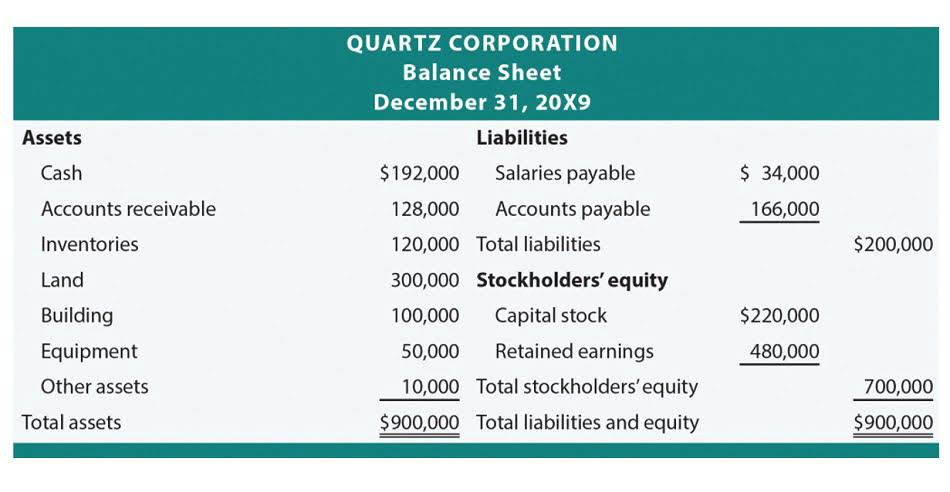
For example, let’s take the case of the income statement – if the gross profit in year 1 was US$40,000 and in year 2 the gross profit was US$44,000, the difference between the two is $4,000. Here the change is positive and we can calculate the percentage change. Both horizontal and vertical analysis have limitations but provide useful insights when analysing financial statements.
This analysis gives the company a heads up if cost of goods sold or any other expense appears to be too high when compared to sales. Reviewing these comparisons allows management and accounting staff at the company to isolate the reasons and take action to fix the problem(s). Horizontal analysis is simply looking at how company performance has changed over multiple periods. For example, a gross profit margin of 15% might seem okay, but there’s no context for that number. But if you compare that to the previous two years in which it was 12% and then 14.2%, it’s suddenly clear that this is a positive result for the company as it shows steady improvement over time.
How to Change Sentence Case in Excel
From basics of stock market, technical analysis, options trading, Strike covers everything you need as a trader. The cash and cash equivalents as of March 31, 2024, were Rs 96,951 million compared to Rs 91,861 million as of March 31, 2023. The profit for the year ended March 31, 2024, was Rs 111,121 million compared to a profit of Rs 113,665 million for the year ended March 31, 2023.